Respiratory therapists are key members of healthcare teams who need a structured onboarding process to provide a smooth transition to practice. In addition to onboarding, they require the guidance of preceptors to facilitate relationship building and cultural immersion. They also need regular competency assessments to ensure they have the skills and expertise to provide safe patient care.
Key Takeaways
- Respiratory therapist onboarding includes four key steps: Preboarding, credentialing, orientation, and training
- Mentorship is important in providing respiratory therapists with the tools to navigate their work, the organization’s culture and access to ongoing support
- Healthcare facilities must regularly assess the competence of respiratory therapists to ensure they continue to meet the requirements for patient care
According to the Bureau of Labor Statistics, the demand for respiratory therapists is expected to grow 12% faster than other occupations, with over 8000 job openings anticipated every year due to employees leaving the profession. What this means for your healthcare facility is the need to create a conducive work environment that fosters professional growth while resulting in higher job satisfaction.
What are the Responsibilities of RT Staff in Healthcare?
Respiratory therapists are key members of healthcare teams. They provide critical care to patients in respiratory distress, which can make a significant difference in emergencies. As part of their responsibility, they:
- Support healthcare teams in making diagnoses for respiratory problems, including providing pulmonary function tests and interpreting diagnostic results
- Administer and manage respiratory care services, such as providing bedside care
- Support patients in cardiopulmonary distress, including providing life-saving care to critically ill patients
- Educate patients on effective ways to manage their respiratory conditions
What are the Key Steps in Onboarding New Respiratory Therapists?
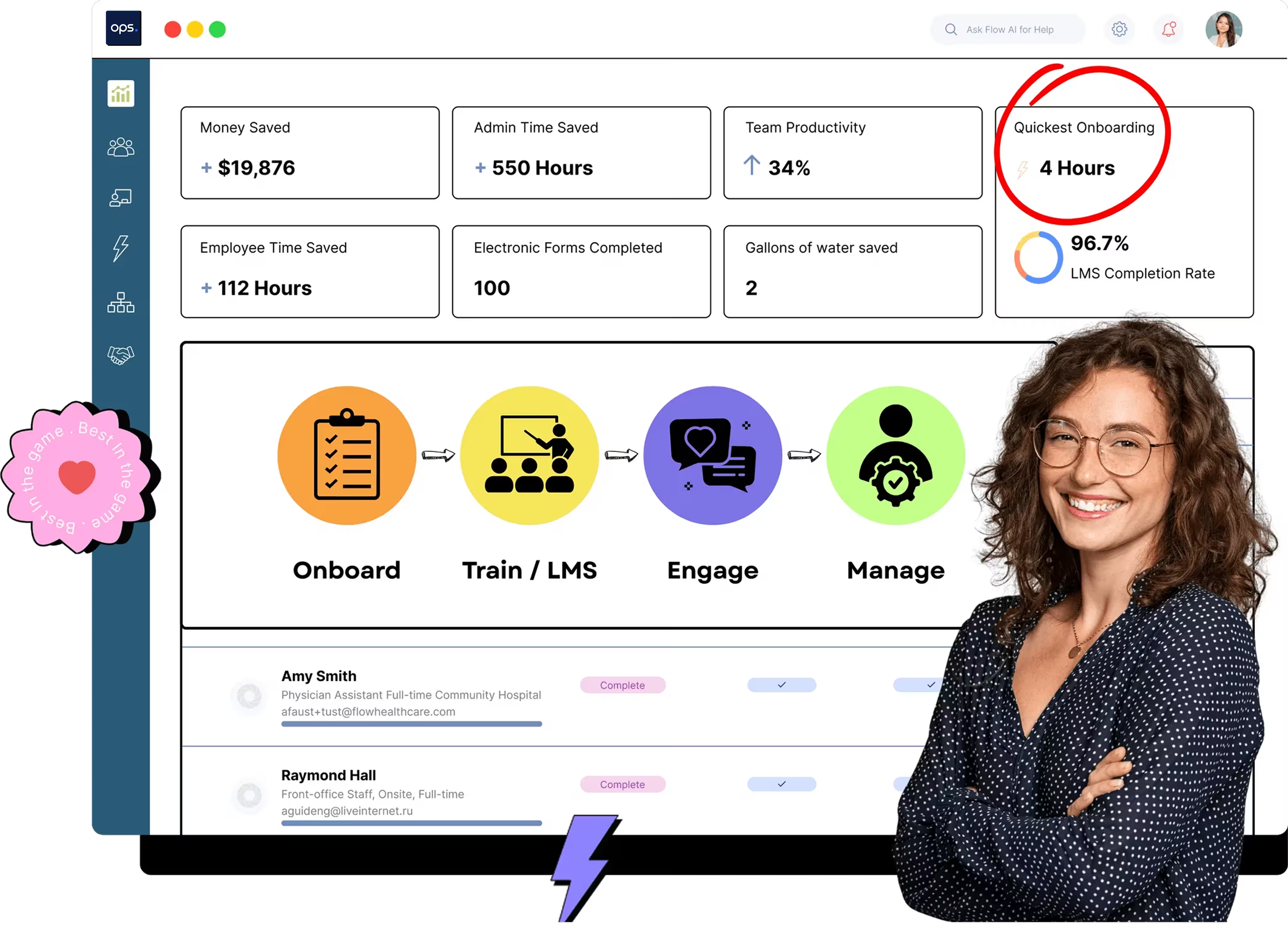
Respiratory therapists form a critical component of your healthcare team. Therefore, your onboarding process should be designed to provide a positive experience for new RT employees. Before you begin this process, invest in a reliable onboarding software such as Ops.Work to help you streamline key processes from credentialing to continuous professional advancement.
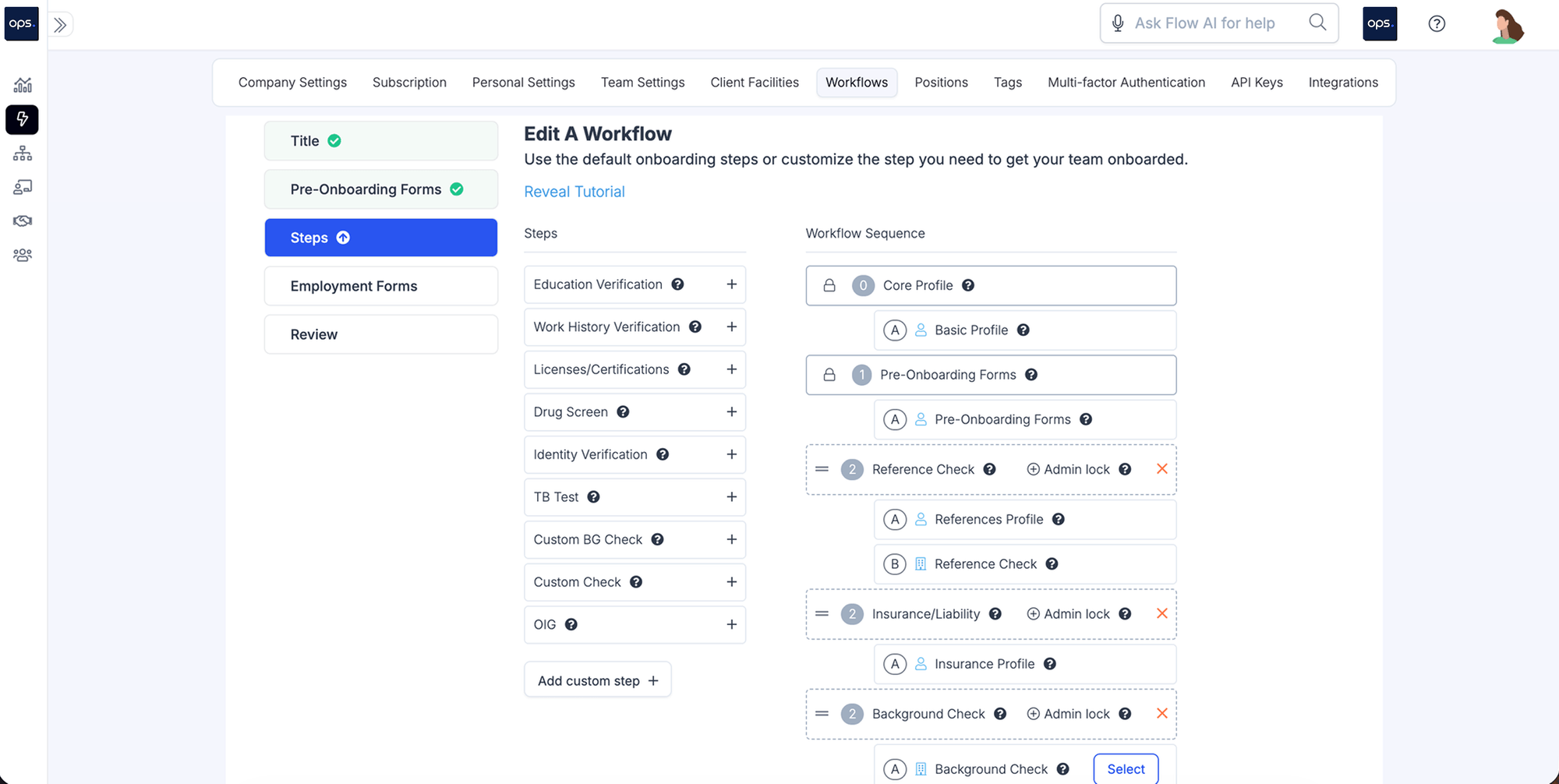
Ops.Work makes it easy to create and edit workflows, whether you’re planning your preboarding efforts or tracking credentialing. The workflow customization dashboard lets you choose what credentialing steps an employee goes through, depending on their role:
1. Preboarding
Preboarding includes all the activities you take after a new hire accepts a new position with your facility and before they report for their first day. These activities include:
- Signing key administrative paperwork, such as policy acknowledgements and confidentiality agreements
- Providing logistical information, such as the reporting date and what to expect on their first day
- Introducing the organization's structure, mission, and values
- A preboarding checklist with tasks the new hire should complete before the reporting day, such as submitting relevant documents for credentialing
2. Credentialing
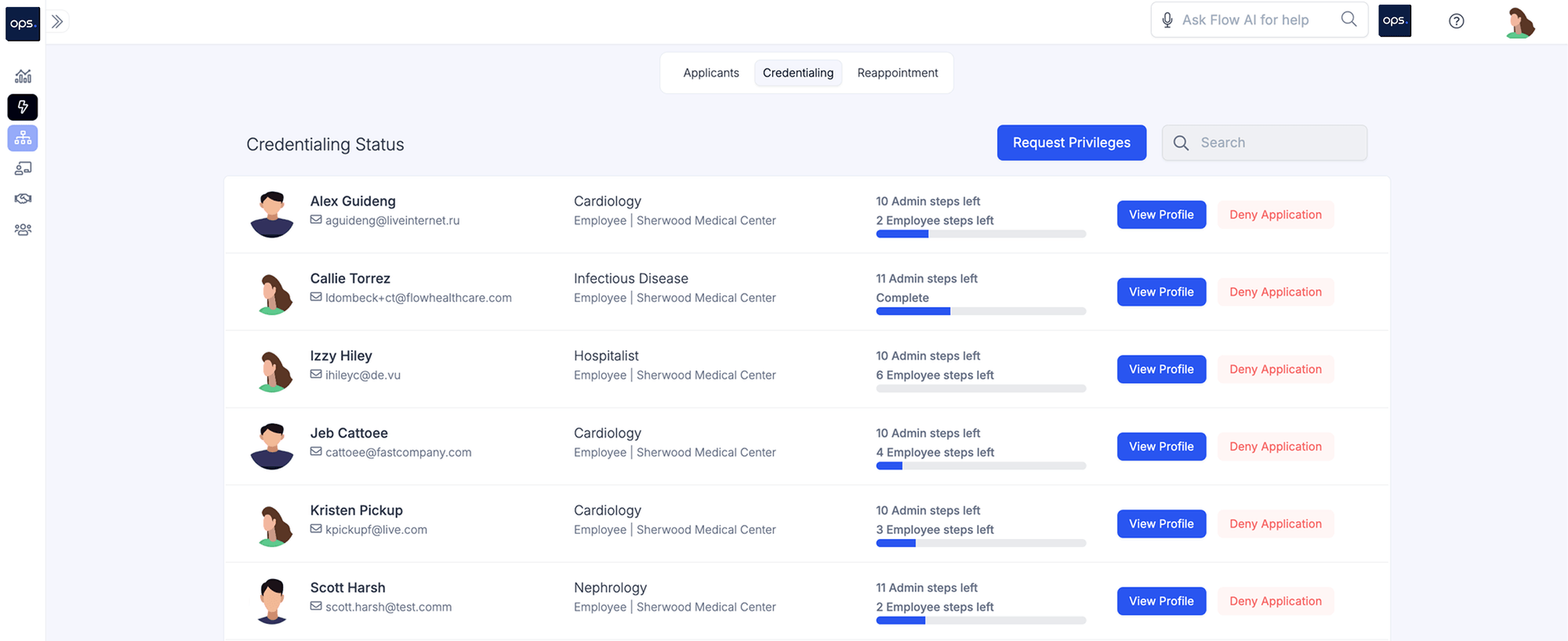
Healthcare organizations must ensure that they hire certified respiratory therapists for patient safety. In addition to the relevant education, they must have licensure from the relevant licensing board for your state.
Credentialing enables you to validate their credentials with the relevant primary sources, ensuring they are qualified to deliver high-quality care to your medical center.
3. Orientation
Orientation happens during the first week of the RT joining your organization. It includes activities such as:
- Introducing them to employees in the RT department
- Giving a facility-wide tour of key departments and other teams
- Providing the new employees with their 30-60-90 day plan that outlines the expectations you have of them for the next three months
- Clarification of their role and responsibilities
- Introduction to mentors
- Providing access to training resources
4. Mandatory Compliance Training
Mandatory compliance training introduces all new employees, regardless of previous experience as healthcare professionals, to federal and state regulatory requirements. This training covers laws such as HIPAA, HITECH Act, Medicare and Medicaid regulations (CMS), and OSHA.
In addition to this training, familiarize them with the working structure of your facility, including software tools such as EHR and your internal standards of patient care.
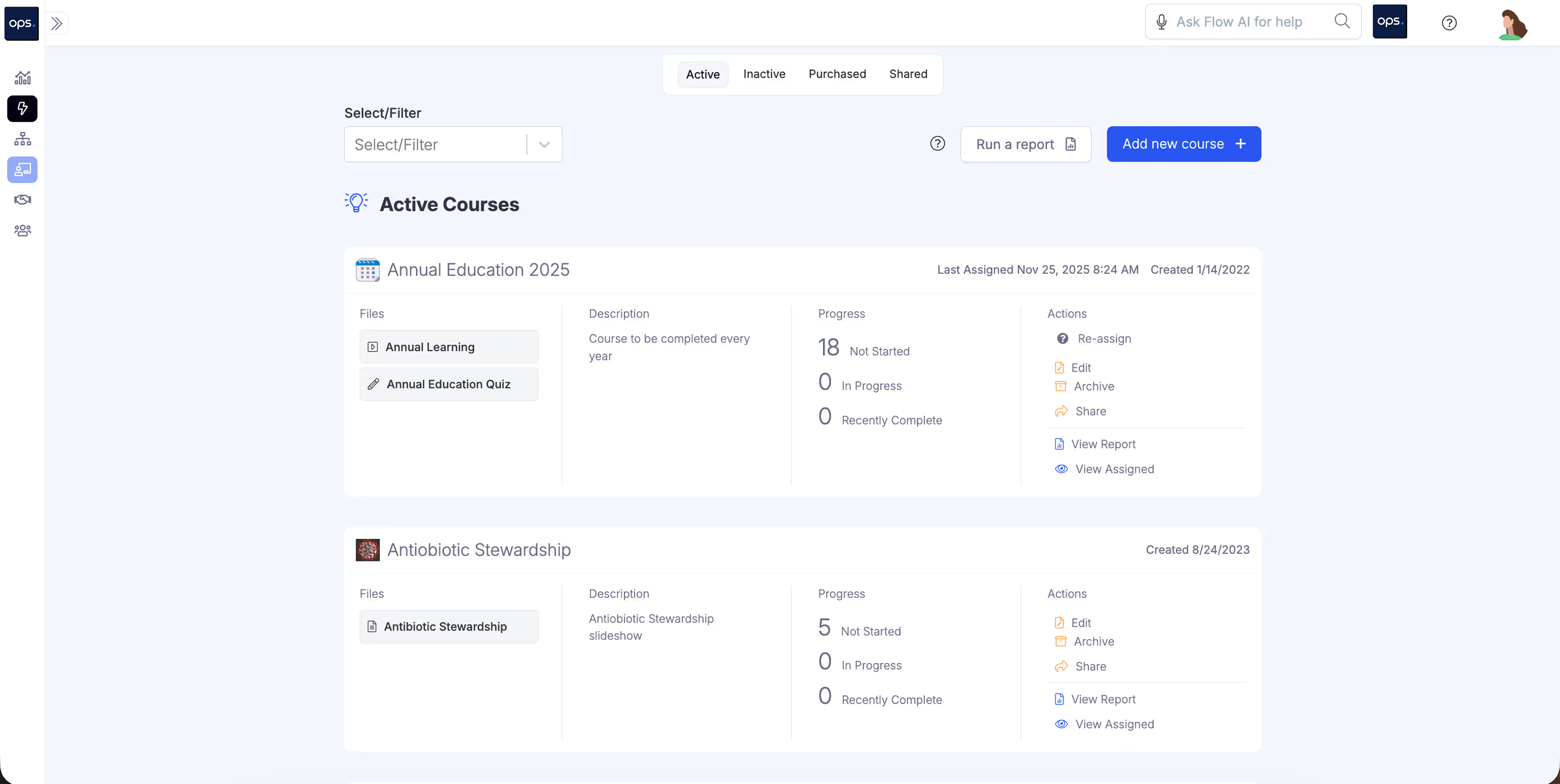
Ops.work allows you to create and deliver mandatory training courses to all employees, track completion progress, and generate reports, all in one dashboard.
What is the Role of Preceptors in New RTs' Professional Development?
Offering mentorship to RTs increases retention rates in several ways:
- It allows your therapists to learn the work culture, therefore assimilate into your facility better
- It allows new RTs to build relationships, thus creating a sense of belonging
- Mentors can guide entry-level healthcare workers and provide feedback to facilitate better patient outcomes
Why are Competency Assessments Necessary for RT Staff?
Competency assessments are critical in respiratory therapy departments. The American Association for Respiratory Care (AARC)) requires respiratory therapists to undergo formal training and demonstrate their competence before they can provide respiratory therapy to patients.
Whether you hire new grads or experienced RT professionals, you must conduct regular competence assessments to ensure your registered respiratory therapists:
- Maintain and improve their competence
- Handle only the duties they are individually competent in
Competency assessment happens at the point of hire and should continue periodically as long as they are in your facility. You can invest in professional development that goes beyond the initial training by providing role-based training to RTs.
Such training keeps them up to date on the evolving skills and competencies required to succeed in their role.
FAQs
What is the typical work environment for a respiratory therapist?
RTs typically work in ICUs, emergency centers, and general hospitals. They provide respiratory therapy services to varied patient populations in home care and healthcare facilities.
What are the education and certification requirements for RT Professionals?
An RT should meet the following education and certification requirements:
- An associate's bachelor's or master's degree in respiratory therapy
- Certification from the National Board for Respiratory Care (NBRC)
- Licensure from relevant state bodies
How can you prevent burnout in respiratory therapists?
Your therapists need a healthy work-life balance to prevent burnout. You can help them prevent burnout by offering employee assistance programs, wellness initiatives, and flexible work schedules to ensure they're not overwhelmed at work.
What career advancement opportunities are available for respiratory therapists?
Beyond the initial onboarding, you should care about how your RTs advance in their career from being new grads to mid-level roles and leadership positions while in your facility. Let them know about the career mobility options and on-the-job training opportunities available to help them grow.
Onboard Your RTs with Ops.work
Set up your new hires for success with our comprehensive onboardingplatform that lets you automate key workflows, assign role-based tasks, and track regulatory compliance. Ops.work helps you integrate new employees, train them, and manage them seamlessly from one central platform. Try our free plan today.
References
Piccuito CM, De Santis Santiago RR. New Graduate Respiratory Therapists' Perceptions of Their Transition to Practice. Respir Care. 2023 Oct;68(10):1365-1376. doi: 10.4187/respcare.11004. Epub 2023 Apr 25. PMID: 37185116; PMCID: PMC10506651.
Bunch, Debbie. “Onboarding for New Respiratory Therapists - AARC | RC Central.” AARC | RC
Central, Dec. 2025, rccentral.aarc.org/new-rts-and-onboarding/.
Frequently Asked Questions
RTs typically work in ICUs, emergency centers, and general hospitals. They provide respiratory therapy services to varied patient populations in home care and healthcare facilities.
An RT should meet the following education and certification requirements:
- An associate's bachelor's or master's degree in respiratory therapy
- Certification from the National Board for Respiratory Care (NBRC)
- Licensure from relevant state bodies
Your therapists need a healthy work-life balance to prevent burnout. You can help them prevent burnout by offering employee assistance programs, wellness initiatives, and flexible work schedules to ensure they're not overwhelmed at work.
Beyond the initial onboarding, you should care about how your RTs advance in their career from being new grads to mid-level roles and leadership positions while in your facility. Let them know about the career mobility options and on-the-job training opportunities available to help them grow.