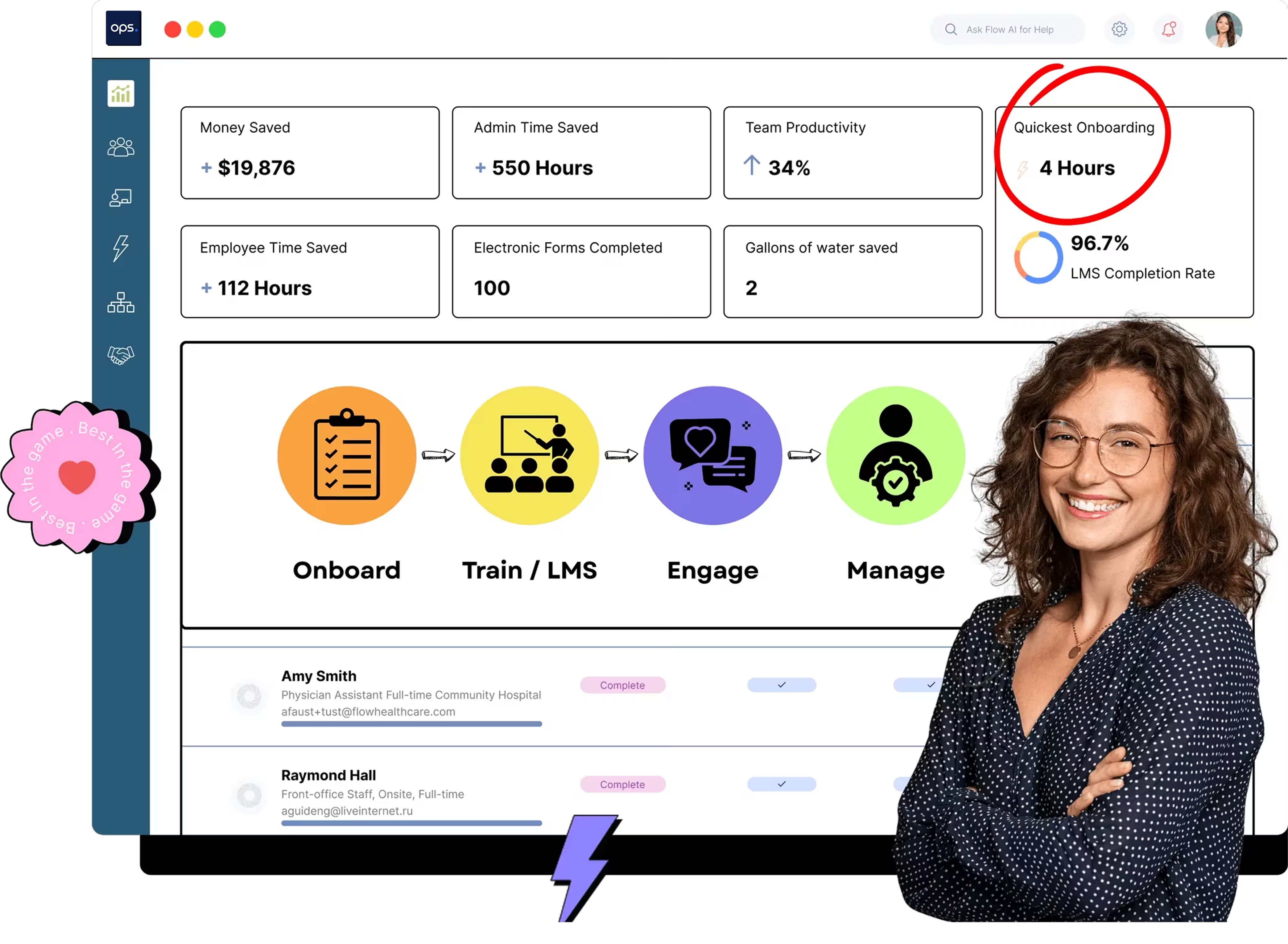
A structured registered nurse onboarding program introduces them to the organization’s culture, clarifies their roles and performance expectations, and lays the foundation for professional development. Key best practices include building a clear onboarding framework with defined goals and metrics, using technology to automate workflows, collecting feedback for continuous improvement, and providing comprehensive training and ongoing support post-onboarding.
Key Takeaways
- A structured onboarding process is critical for registered nurse retention, better patient outcomes, improved productivity, and compliance with regulatory requirements.
- Clarifying roles, responsibilities, and performance expectations early on facilitates better engagement as RNs know what’s within their scope
- Providing support during and after the onboarding process ensures RNs have a positive experience with your organization and promotes retention
- Technology is key in streamlining various onboarding activities, including credentialing, training, and compliance management
Onboarding registered nurses is the first step in preparing them to integrate into your healthcare facility. It also lays the groundwork for enhancing job satisfaction, career development, and higher retention rates. To succeed in your efforts, you must develop a well-structured program that:
- Tells them about the organisation's mission, values, and culture (How are things done in your facility?)
- Helps them discover and develop their strengths and capabilities - nurses thrive when they know what they are good at and have the opportunity to apply it in their roles
- Clearly outlines their roles, responsibilities, and expectations
- Facilitates engagement with co-workers and different healthcare teams within your organization. These relationships offer opportunities for formal and informal mentorship while creating a sense of belonging
- Provides a clear path for career development. Healthcare organizations that invest in the long-term success of their RNs have higher retention rates than facilities without a clear path for career growth.
What are the 5 Best Practices for Nurse Onboarding?
The NSI reported a 16.4% turnover rate for registered nurses nationwide, with each nurse costing an average of $61,110 to replace. Nurses may leave your facility for several reasons, including poor engagement with the facility, inadequate support for their well-being, and limited career development opportunities.
Developing strong onboarding programs can significantly improve retention rates. A strong program provides learning opportunities and helps nurses feel connected to your mission and vision. Here are tips to provide effective orientation and onboarding:
1. Create an Onboarding Framework
Successful onboarding begins with a well-structured framework. To create one:
- Determine your goals. These include improving employee productivity, reducing turnover and related hiring costs,, and improving patient outcomes.
- Map the employee onboarding journey with key milestones for each step of the process. Break them down into actionable steps and create a standardized checklist for your new nurses.
- Identify the key tasks and assign the corresponding personnel to ensure a streamlined implementation process.
- Determine key metrics to help you track the effectiveness of your onboarding strategy. Some of these metrics include the quality of hire, turnover rates, reasons for employee departures, and the time it takes to ramp up to clinical practice.
- Customize your plan to accommodate the diverse demographics within your facility. This allows you to deliver a personalized onboarding experience to all nurses, regardless of their department.
- Collect feedback and implement lessons learnt to improve the experience.
2. Integrate Technology to Streamline the Onboarding Process
Integrating staffing solutions, such as onboarding software, streamlines onboarding by reducing the time required to complete certain tasks and minimizing errors associated with manual processes.
Ops.work automates key steps of the onboarding process, including:
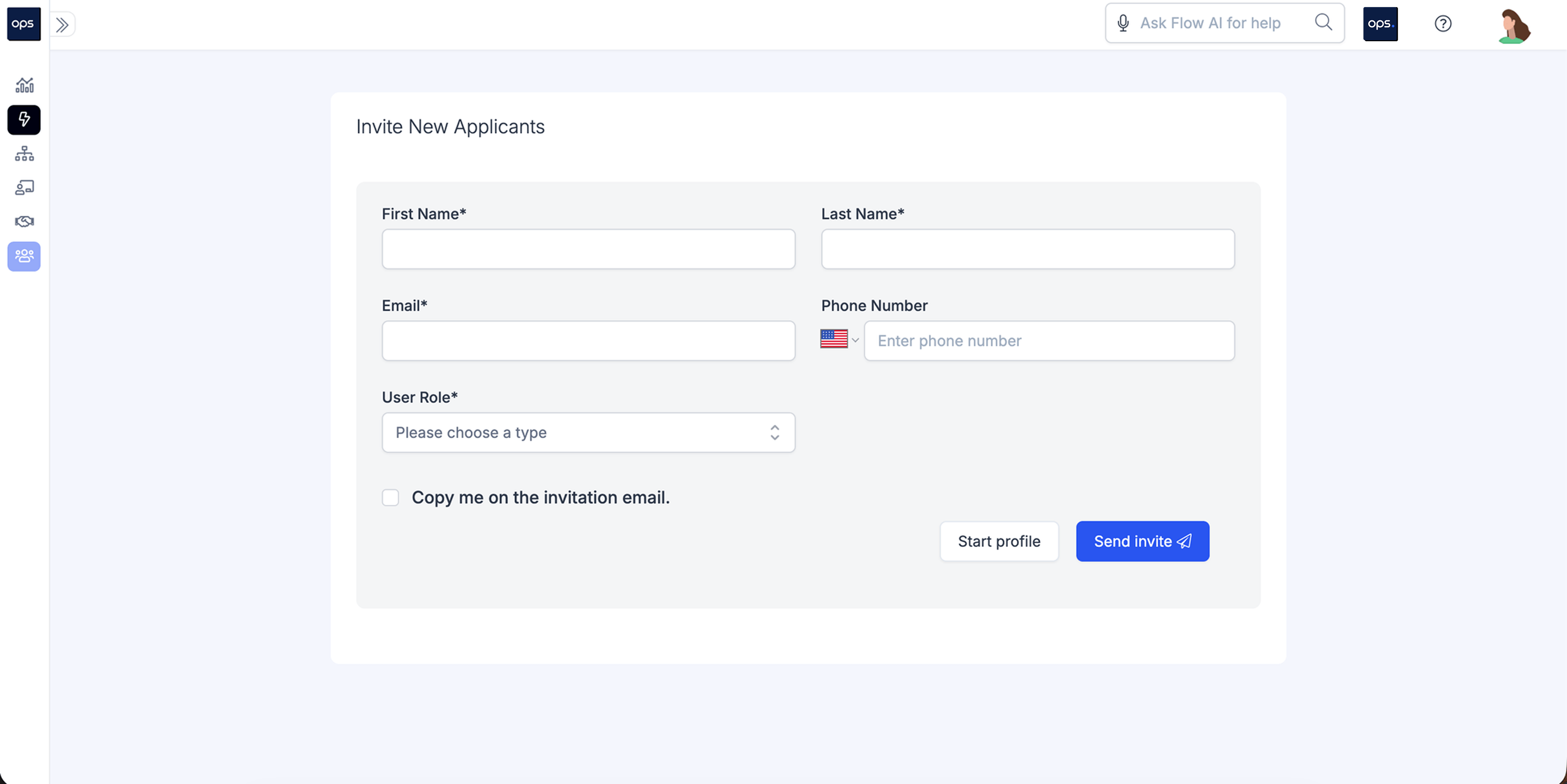
Adding new hires to join the platform. To do this, enter the applicant's details and send them an invitation.
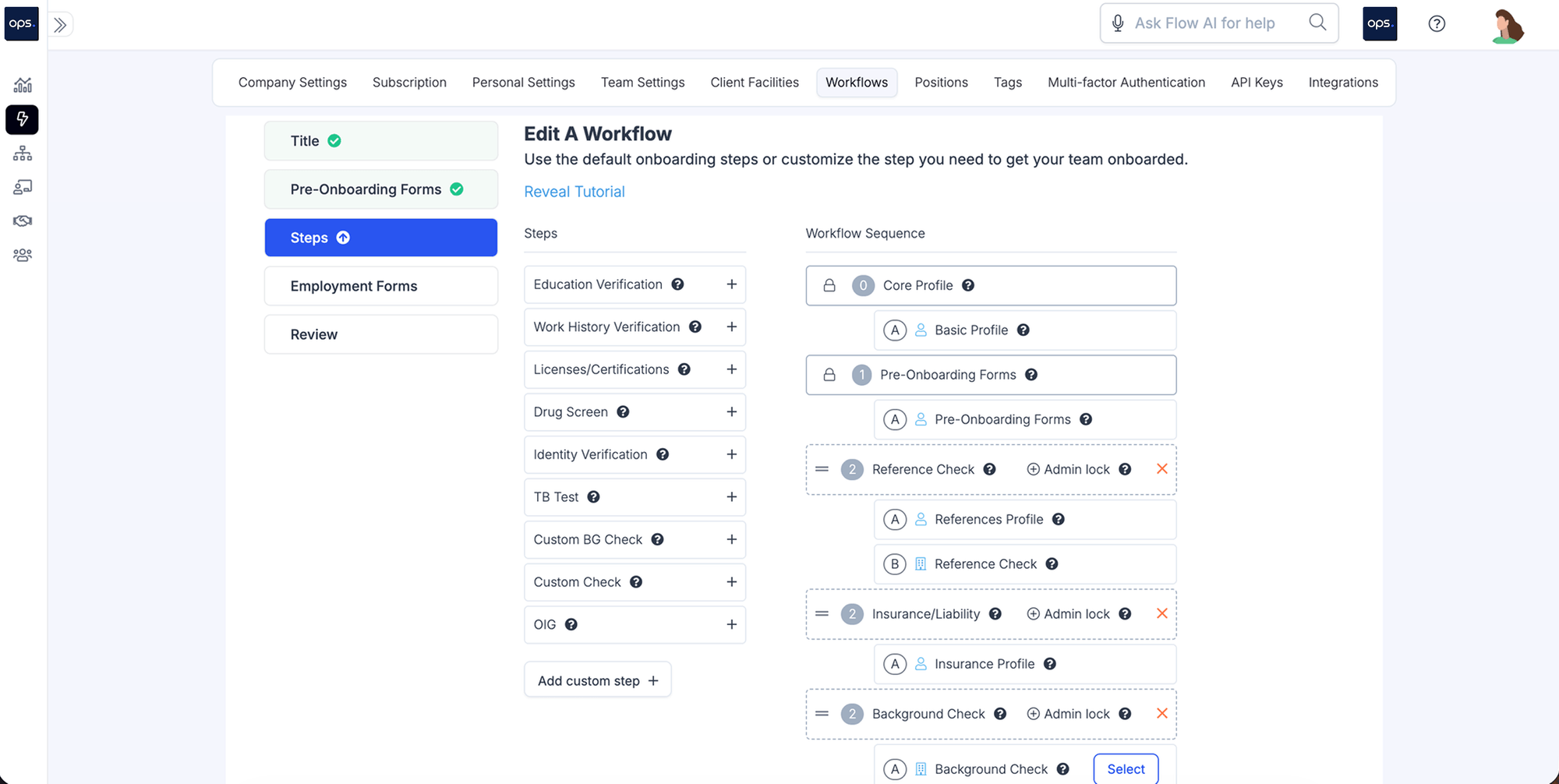
Automating onboarding workflows using custom fields based on the role
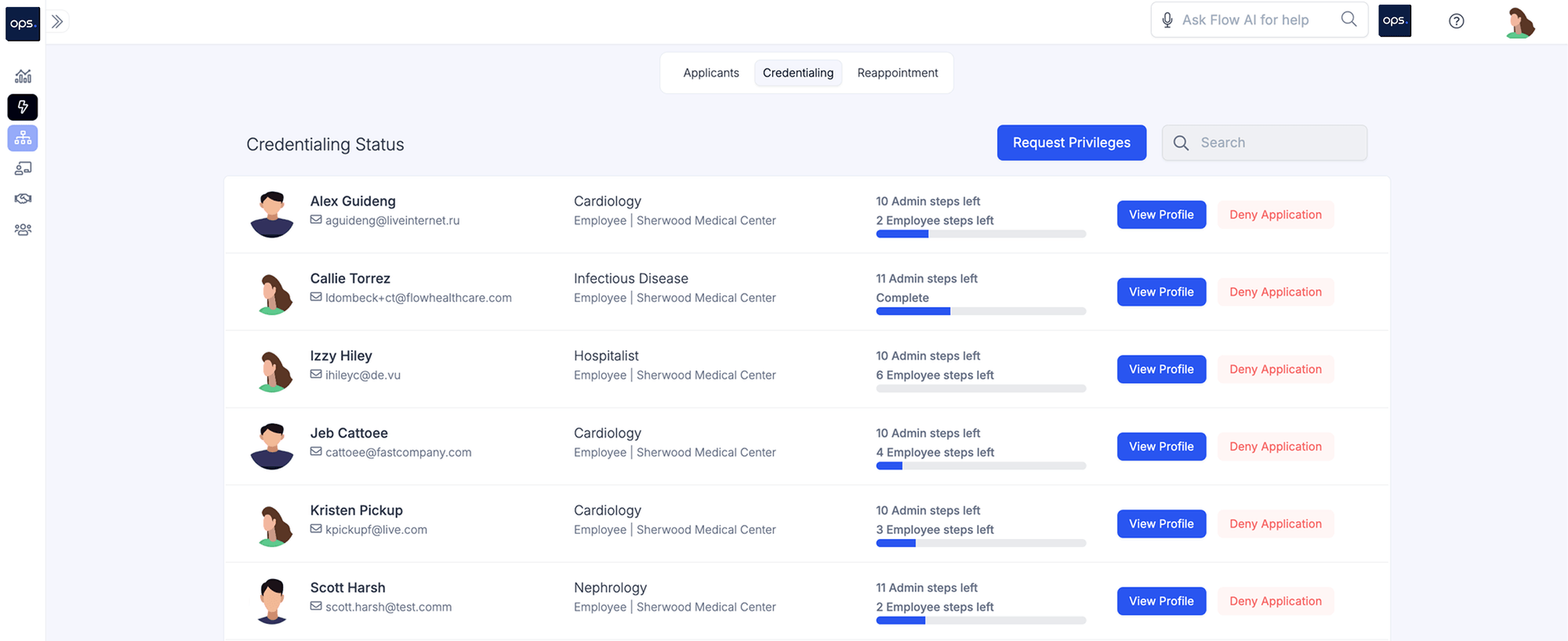
Credentialing: you can assign tasks such as submitting documents and initiating the credentialing process to ensure your RN is in good standing to practice.
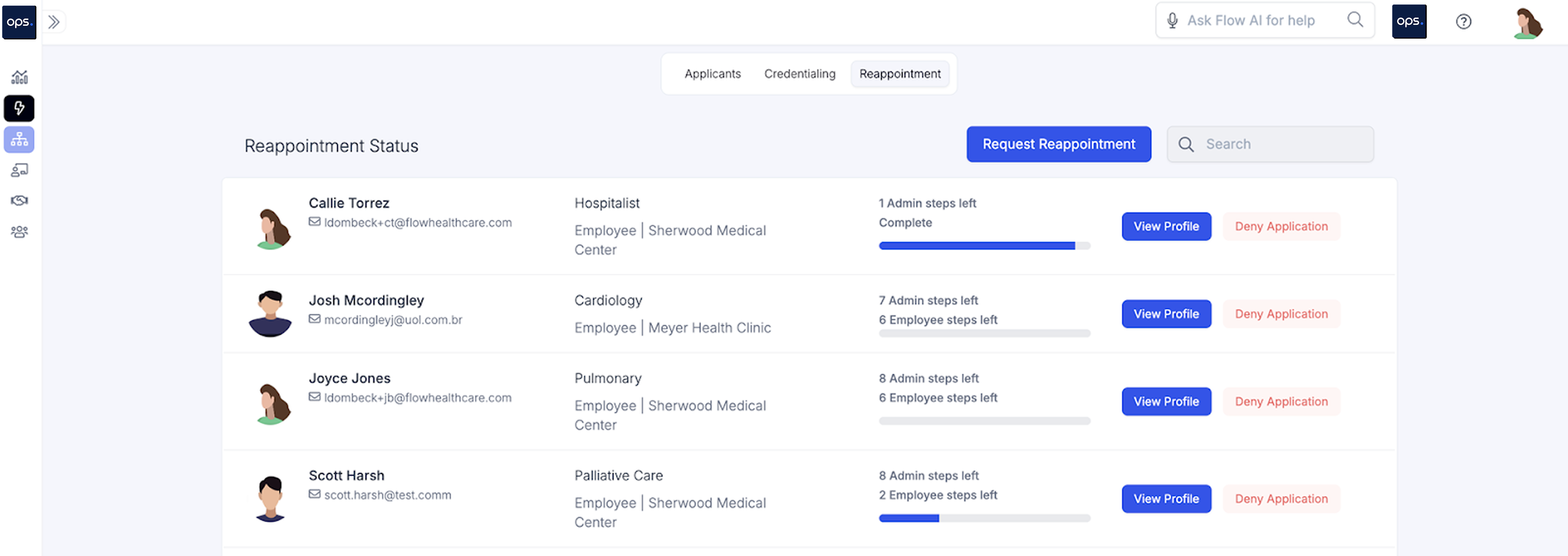
Reappointment tracking to ensure you nurses remain qualified to take care of patients. The reappointment dashboard regularly updates you on employees with pending reappointments, allowing you to track their status.
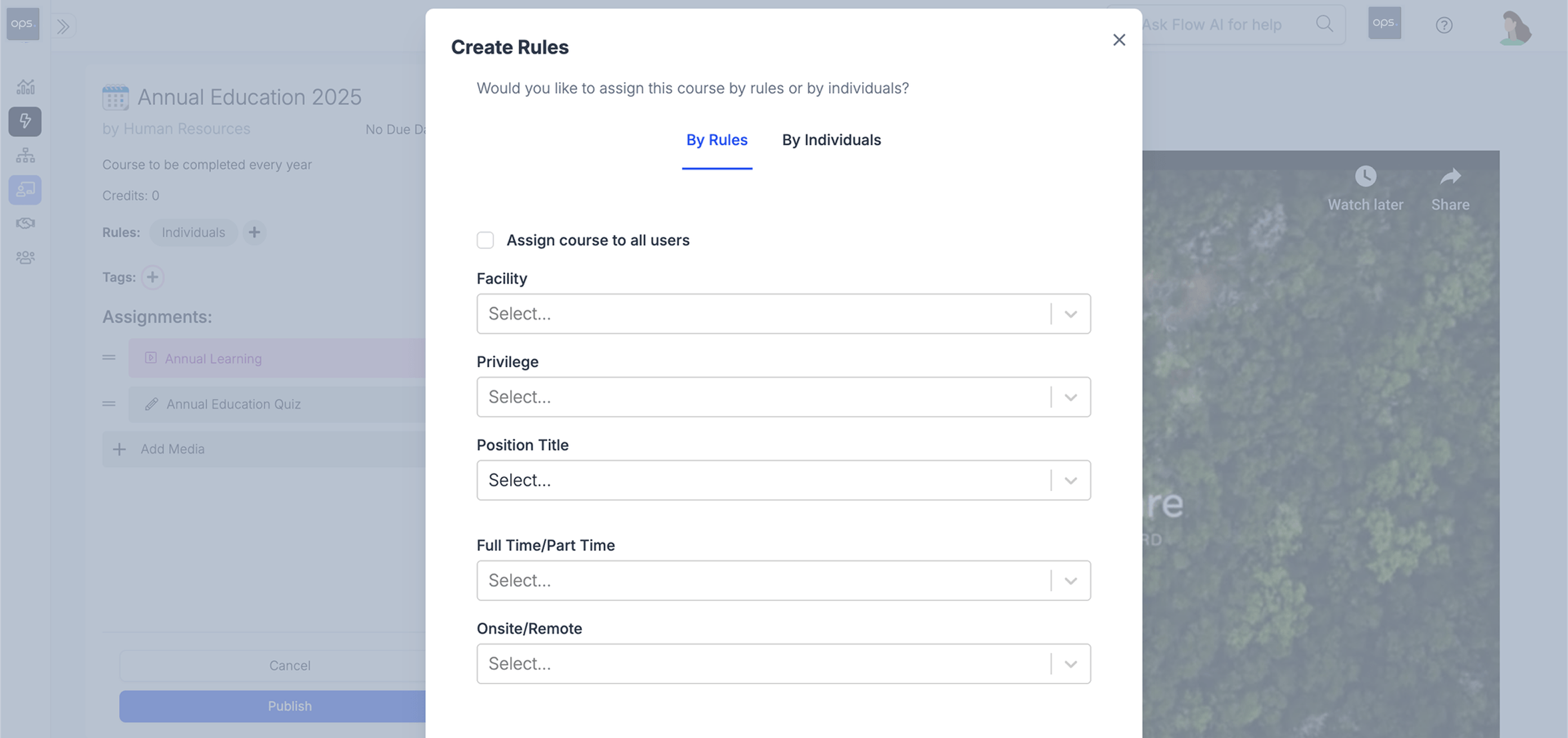
Creating and assigning mandatory and role-based courses
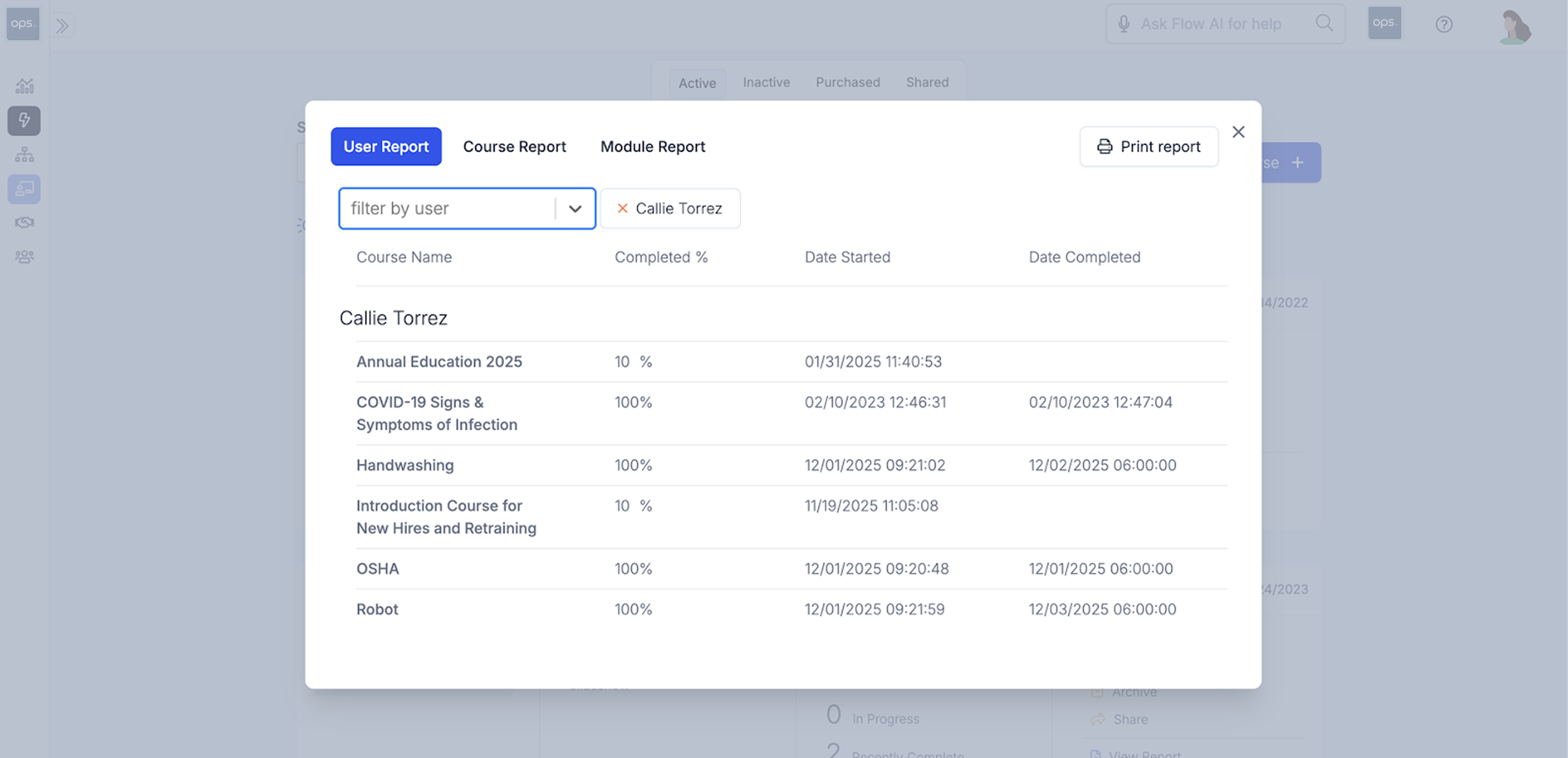
Generating various reports to track your onboarding and training efforts
3. Collect and Implement Feedback
Feedback will help you develop a more effective onboarding program. Schedule regular check-ins with:
- New staff to determine how well they understand their roles and responsibilities, and measure the level of their engagement with your culture.
- Preceptors
- Managers to understand the challenges or gaps in your program
You can gather key feedback through several means, such as anonymous surveys, one-on-one check-in sessions, and performance assessments.
Interviews with employees who leave before the first year can also provide key feedback on the gaps in your programs.
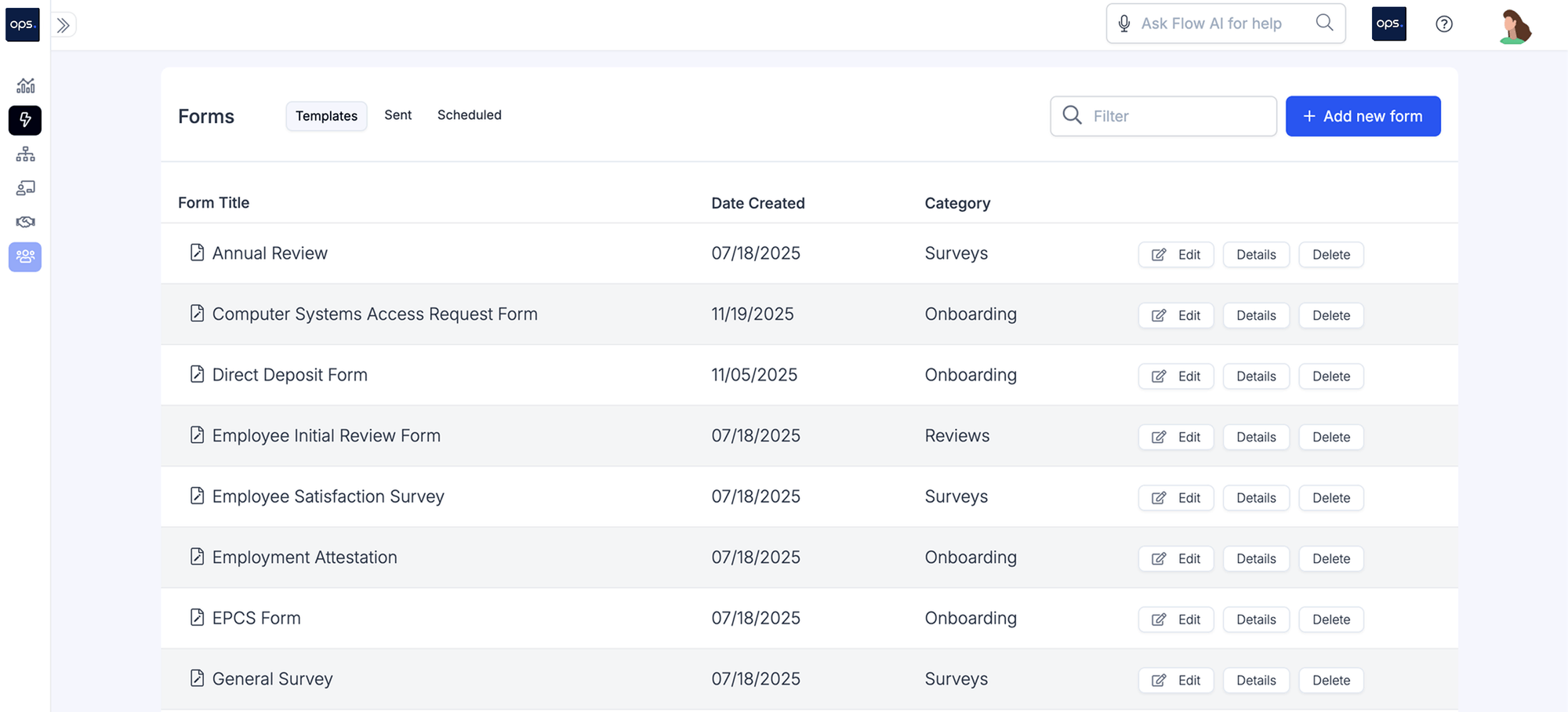
You can create these feedback collection tools with ops.work. Our form builder allows you to create surveys, review forms, and checklists. The tool also integrates with Jotform, allowing you to access thousands of free templates. Try our free plan to test these feedback collection tools.
4. Incorporate Training into Your Onboarding Plan
Your program should incorporate training, whether you are onboarding new graduates or experienced nurses.
This training should include:
- Soft and clinical skills to help nurses deliver safe and empathetic patient care
- Compliance training to introduce regulations such as OSHA, HIPAA, and internal policies and procedures
- Technology training to familiarize them with the tools commonly used in your facility, including communication tools, EHR, diagnostic tools, life support machines, and patient monitoring systems
- Emergency response training, including the codes used in your healthcare facility and their meanings
The training should be personalized and standardized across all departments to ensure a consistent learning experience. Ops.work offers an intuitive platform for creating and delivering courses.
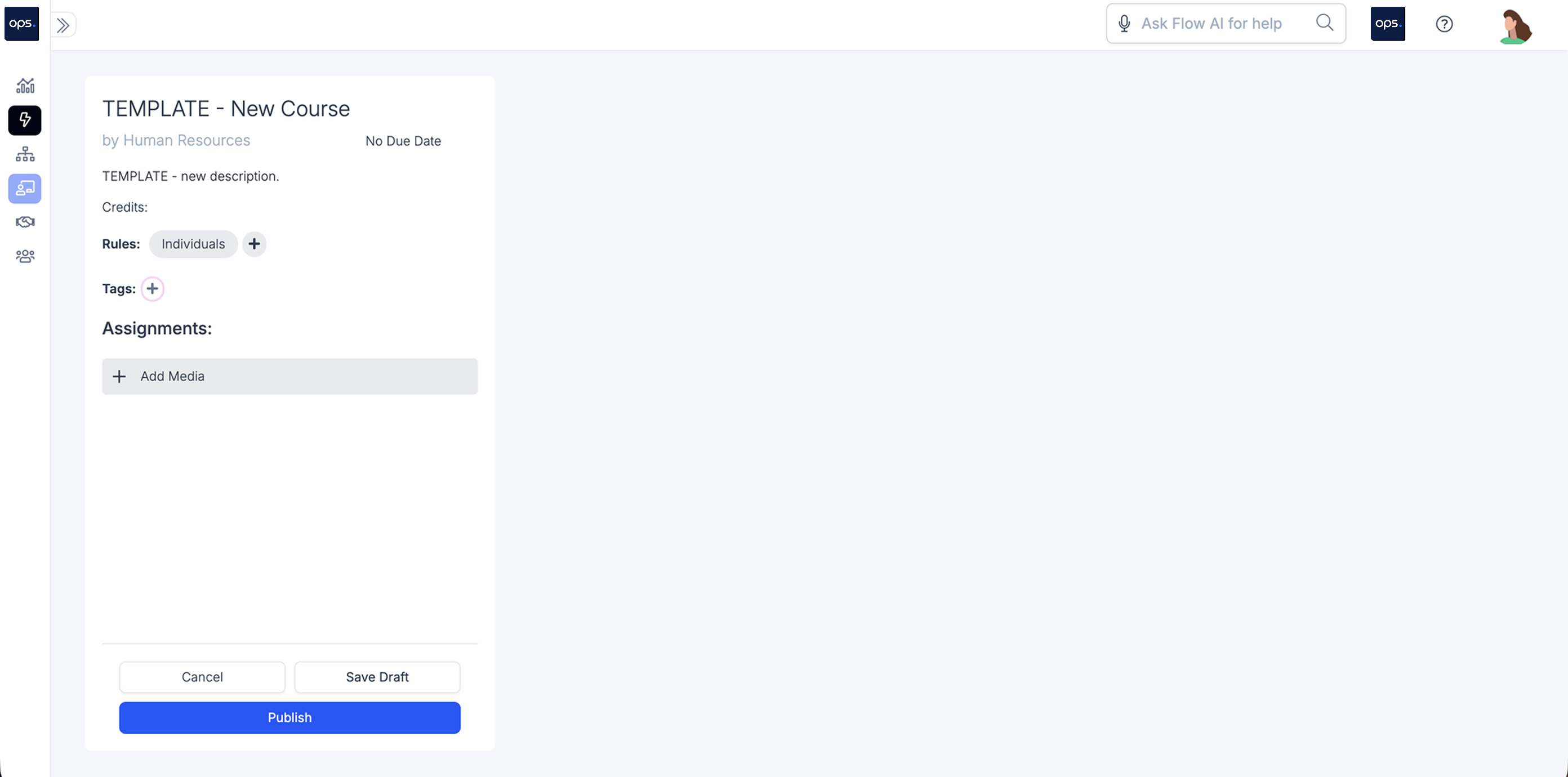
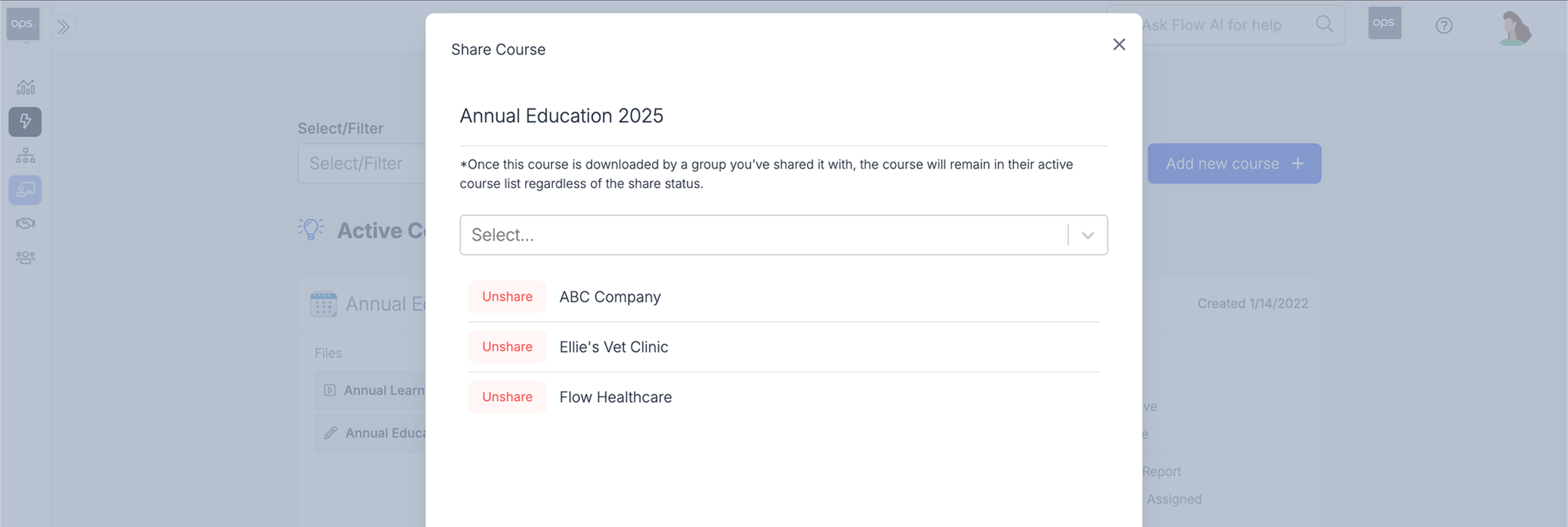
You can assign these courses by the role or department your nurses are in. It also allows you to share these valuable resources with other facilities you run for a consistent experience across locations.
5. Create a Post-Onboarding Plan
Many onboarding programs follow the 30-60-90 framework. This framework can be useful when easing newly hired nurses into their role.
However, passing the 90-day mark doesn't mean you've fully convinced your new nurses to stay. You should provide ongoing support throughout their first year of employment and beyond.
A post-onboarding plan supports your employees as they transition into productive team members. As part of this plan:
- Engage in conversations about career development opportunities available in your organization. This includes training opportunities and career paths within your facility. These conversations foster increased job satisfaction.
- Conduct regular check-ins and feedback sessions
- Conduct regular assessments and performance evaluations to identify gaps in clinical knowledge and competency
FAQs
How does effective nurse onboarding improve retention rates?
Successful onboarding programs promote nurse retention by providing new nurses with the support, training, and mentorship they need to grow into competent nurses. It keeps them engaged, introduces them to your organizational culture, and fosters collaboration among nurses in your facility.
What are the key steps in onboarding RNs?
Here are the key steps when onboarding new nurses:
- Preboarding and first-day prep activities, such as sending welcome packets and HR paperwork
- Orientation sessions
- Cultural immersion
- Role-based training to ensure nurses are ready to provide safe and effective care to patients
- Mentorship to help new nurses settle into their roles
- Check-in and feedback sessions
- Ongoing support (post-onboarding activities)
How is nurse orientation different from nurse onboarding?
Orientation and onboarding processes are closely related but differ in their duration and purpose. The orientation process typically lasts one to a few weeks. It helps nurses become aware of the facilities, departments, and staff in your organization.
In contrast, onboarding of new hires is a structured program that fosters deeper integration of every nurse into your facility over several months. Effective onboarding helps nurses settle into their new role and feel welcomed, thus increasing job satisfaction.
What are the key challenges in onboarding nurses?
High turnover rates are the main challenge in implementing onboarding programs for nurses. Other challenges include the complex regulatory environment in which healthcare facilities operate, as well as technological barriers. Ops.work helps your facility overcome these barriers by automating the manual processes involved in integrating staff into your organization, from automated workflows and credentialing to onboarding training, reporting, and compliance.
Conclusion
Integrating nurses into your facility is the last step in the healthcare staffing process. It influences how well nurses connect with your organization. Developing effective programs to help them when starting a new position within your facility ensures they achieve greater satisfaction and access to opportunities for continuous learning and career advancement. Using software to automate the onboarding process streamlines and allows you to track related activities and measure the impact of your efforts. Try our free plan to improve your onboarding program.
References
Valdes, Elise G., et al. “Onboarding New Graduate Nurses Using Assessment-Driven Personalized Learning to Improve Knowledge, Critical Thinking, and Nurse Satisfaction.” Journal for Nurses in Professional Development, vol. 39, no. 1, 20 Oct. 2021, pp. 18–23, https://doi.org/10.1097/nnd.0000000000000805.
Grieshop, Sara. “What Is a Nurse Orientation Pathway? A Complete Guide for Educators and Leaders.” Aacn.org, American Association of Critical-Care Nurses, 26 Aug. 2025, solutions.aacn.org/blog/what-is-a-nurse-orientation-pathway-a-complete-guide-for-educators-and-leaders.
Muñoz, Pilar Montes, et al. “The Impact of an Onboarding Plan for Newly Hired Nurses and Nursing Assistants: Results of a Quasi-Experimental Study.” Nursing Reports, vol. 15, no. 11, 12 Nov. 2025, pp. 398–398, https://doi.org/10.3390/nursrep15110398.
Horner, Anna. “Nurse Orientation and Onboarding: A Make or Break!” AMSN, 3 Dec. 2025, amsn.org/Practice-Resources/Medical-Surgical-Monitor/Article/nurse-orientation-and-onboarding-a-make-or-break.
Frequently Asked Questions
Successful onboarding programs promote nurse retention by providing new nurses with the support, training, and mentorship they need to grow into competent nurses. It keeps them engaged, introduces them to your organizational culture, and fosters collaboration among nurses in your facility.
Here are the key steps when onboarding new nurses:
- Preboarding and first-day prep activities, such as sending welcome packets and HR paperwork
- Orientation sessions
- Cultural immersion
- Role-based training to ensure nurses are ready to provide safe and effective care to patients
- Mentorship to help new nurses settle into their roles
- Check-in and feedback sessions
- Ongoing support (post-onboarding activities)
Orientation and onboarding processes are closely related but differ in their duration and purpose. The orientation process typically lasts one to a few weeks. It helps nurses become aware of the facilities, departments, and staff in your organization.
In contrast, onboarding of new hires is a structured program that fosters deeper integration of every nurse into your facility over several months. Effective onboarding helps nurses settle into their new role and feel welcomed, thus increasing job satisfaction.
High turnover rates are the main challenge in implementing onboarding programs for nurses. Other challenges include the complex regulatory environment in which healthcare facilities operate, as well as technological barriers. Ops.work helps your facility overcome these barriers by automating the manual processes involved in integrating staff into your organization, from automated workflows and credentialing to onboarding training, reporting, and compliance.